

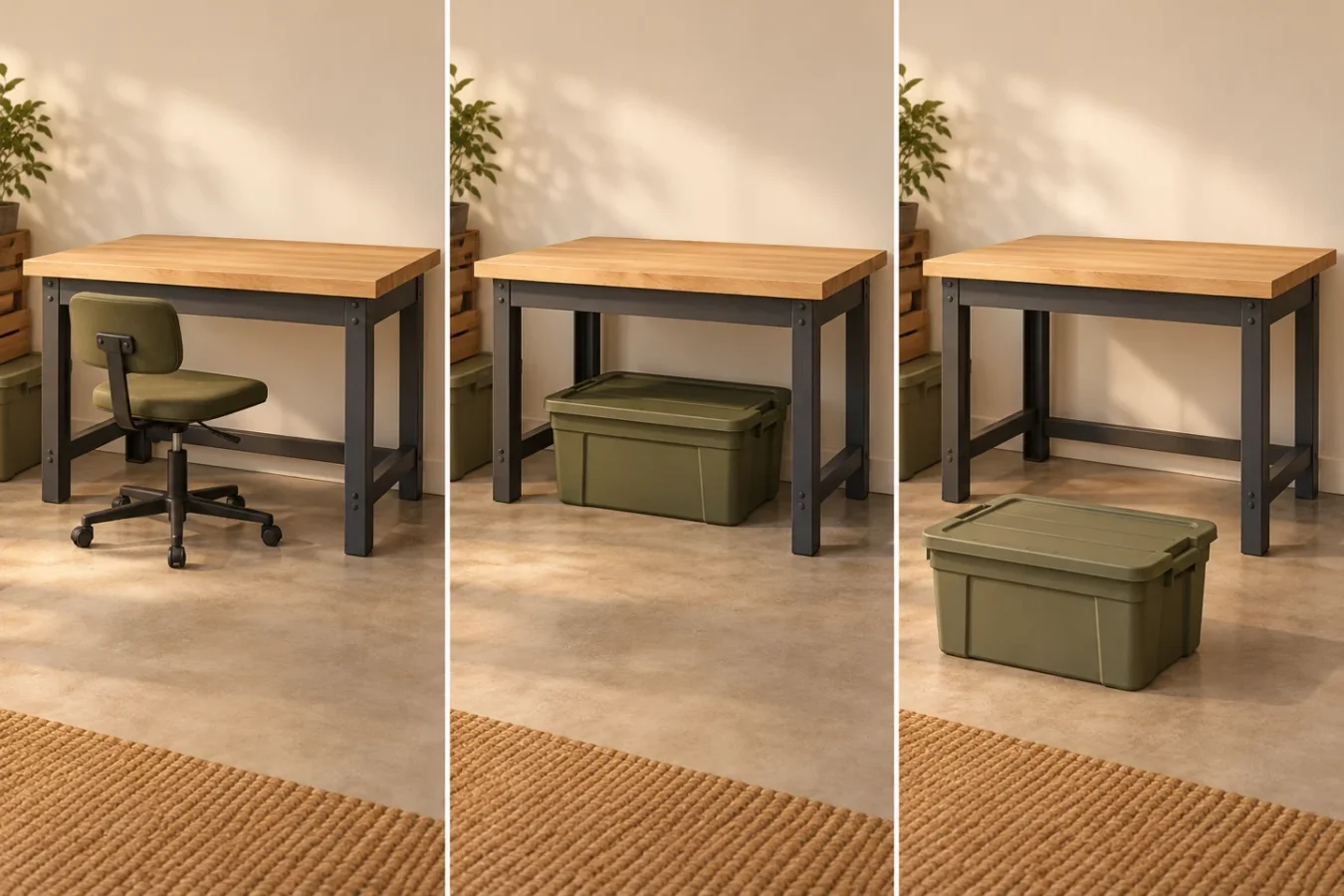
AI-generated concept illustration. Fictional workspace and objects; not measured results or a completed GAH project.
A bin can fit under a workbench and still make the bench harder to use. The lid may catch a brace, the chair may lose its place, or the bin may only come out after another project has moved. Before buying storage, try the space in three states: working, parked and being retrieved.
This guide is a reader-led layout check. GAH has not measured or tested your bench, and the fictional illustration is not a dimensioned plan, a load-rating claim or an ergonomic certification.
Decide what the bench is for this week
Name one real task: assembling a paper model while seated, sorting a small kit while standing, or parking supplies between sessions. Then name what must remain available while you do it. A shared bench may need an empty chair position more than another permanent drawer.
If two people use the bench differently, write both uses down. The shared-workspace guide provides a simple handover agreement. You do not have to make every use permanent: a movable kit can have a separate parking place when someone sits down.
Measure the opening you actually have
Start with the existing bench and a suitable container you already own. Record the clear width, height and depth along the proposed storage path. Look for braces, aprons, feet, cables, handles and anything below the top that narrows the usable space. The outside width of the bench is not the clear opening beneath it.
Measure the container in the configuration you will store: lid closed, handles in their normal position and anything protruding included. Then consider opening the lid and getting a hand onto the handle. A stored rectangle and an accessible kit are different checks.
Use the garage measuring guide to keep units consistent. The bin and shelf fit checker helps compare recorded dimensions; it cannot decide whether you can sit, reach or retrieve comfortably, or whether a bench can support a load.
Try state one: the working position
Put the usual chair or stool in place, with the storage removed. Try the actual task setup briefly. Note where your legs, feet and chair need space, and whether you can approach and leave without moving an obstacle. If the arrangement is uncomfortable or obstructed, stop and change the layout rather than treating a successful measurement as permission to continue.
CCOHS's work-chair guidance emphasizes matching the chair to the task and leaving clearance between the legs and the underside of the worktable. That supports checking the real working position; it does not provide a universal under-bench bin size. CCOHS work-chair guidance.
On your sketch, label the area needed during that task “keep clear while working.” Use your own observation, not a clearance copied from a product photograph.
Try state two: the parked kit
Place an empty or comfortably manageable existing container in the proposed spot. Do not alter the bench or remove structural braces to make it fit. Check the bench, shelf and container instructions before relying on a load rating or changing their configuration.
Record what the parked kit blocks. Does the chair still have a home? Can a drawer above it open? Does a cord get trapped? Can someone else see where the kit belongs? For a setup that moves between storage and work, the pack-away craft station guide can help keep the pieces together.
Try state three: the whole retrieval
With the route clear and a manageable trial load, take the container out, put it at the work position, open it, close it and return it. Include turning and the temporary place where the lid rests. Do not leave the trial blocking an exit or walking route.
Write down the first conflict rather than forcing the motion. “Handle catches the front brace” is more useful than “storage does not work.” “Chair has to move first” may be acceptable if there is an agreed chair parking place; it may be a poor trade if someone uses that chair constantly.
Choose one reversible next trial
Use the free three-use worksheet to record the working space, parked kit and retrieval route. Copy the same fields onto plain paper if you prefer. Keep measured dimensions separate from observations and unanswered questions.
Possible next trials include a smaller kit in an existing container, a different parking orientation that respects its instructions, or storing the kit elsewhere while reserving the bench for seated work. Change one thing and repeat all three states. No new storage product is recommended here, and no purchase is required to find the first conflict.
Get the blank worksheet
Open the accessible HTML worksheet or download the one-page printable PDF. You can also copy the fields onto paper. The HTML worksheet does not save your entries; use your browser’s print dialog to keep a copy.
Sources and scope
The CCOHS work-chair page was reviewed October 26, 2026; its fact sheet lists a September 29, 2022 review. It supports the task-fit and leg-clearance principles cited above. The three-state trial and worksheet are original GAH editorial guidance. Actual dimensions, product limits and suitability remain yours to verify with your equipment and task.