

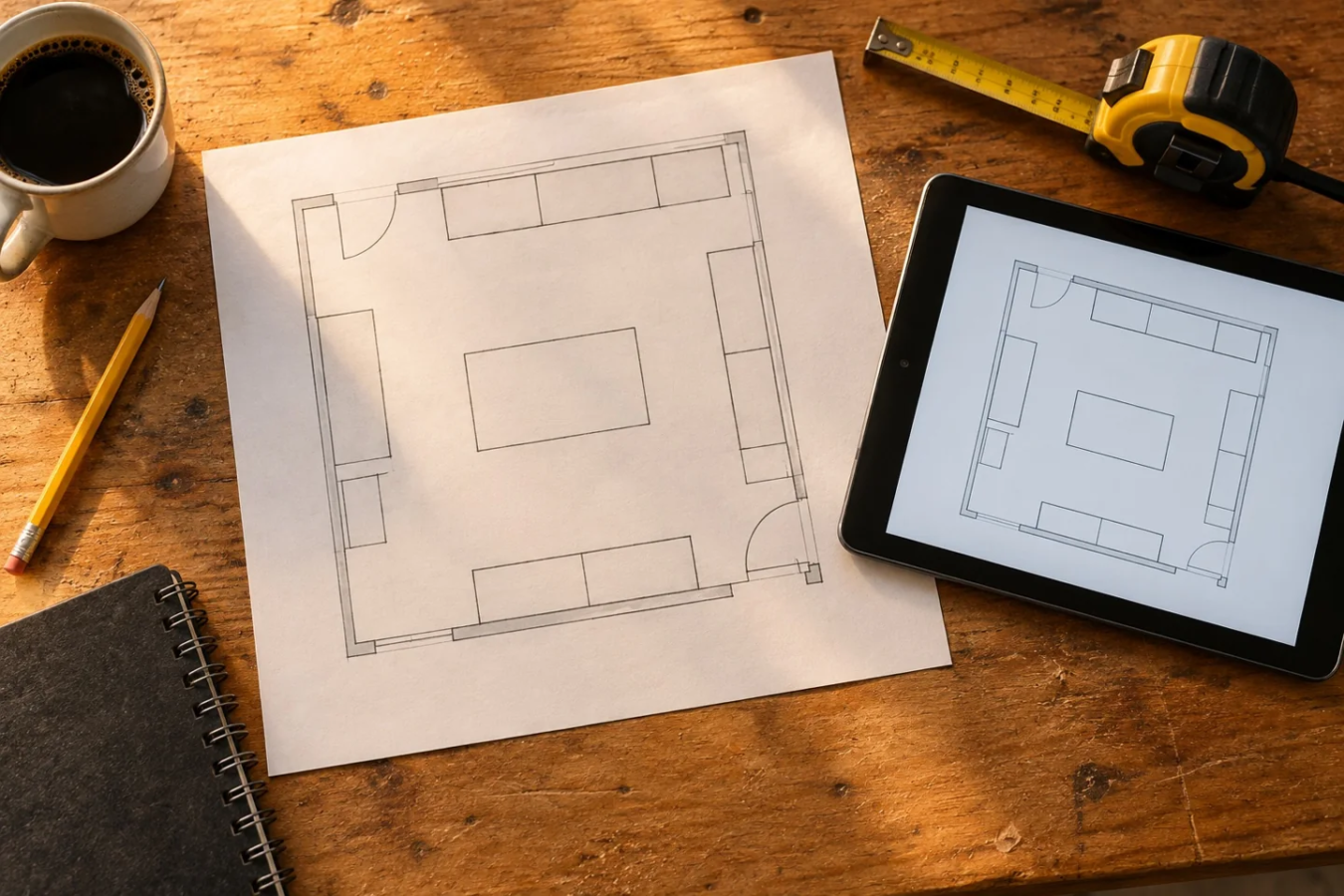
“Sort the garage” is a destination without a stopping point. “Make one shelf usable for the model-building kit” is a project you can inspect, finish and learn from. A manageable weekend plan starts by making the result smaller and the unknowns visible.
This guide is for planning modest workspace improvements and hobby tasks. It does not replace the instructions, skills or qualified help required for electrical, structural or other specialist work. If the next step depends on an unanswered safety question, resolving that question is the project.
Write the finish line in one sentence
Describe a result you could photograph or demonstrate. Examples include “the drawing kit fits on one shelf and can be carried to the bench” or “the common hand tools return to one labeled location.” These are illustrative project briefs, not accounts of GAH renovations.
Add one sentence describing what is outside the project: no cabinet replacement, no rewiring, no reorganization of the whole household. That boundary helps when an appealing side task appears halfway through the session.
Test the finish line by asking what must be true when you stop. If the answer includes several independent outcomes, choose one and save the others for later. Small is useful when it produces a complete result you can actually try.
Worked example: give one kit a shelf
Treat this as a fictional planning example, not a build report. The finish line is: “The paper-model kit has one agreed shelf location, and I can take it to the bench and return it without unpacking every piece.” Replacing the shelving and reorganizing other hobbies stay out of scope.
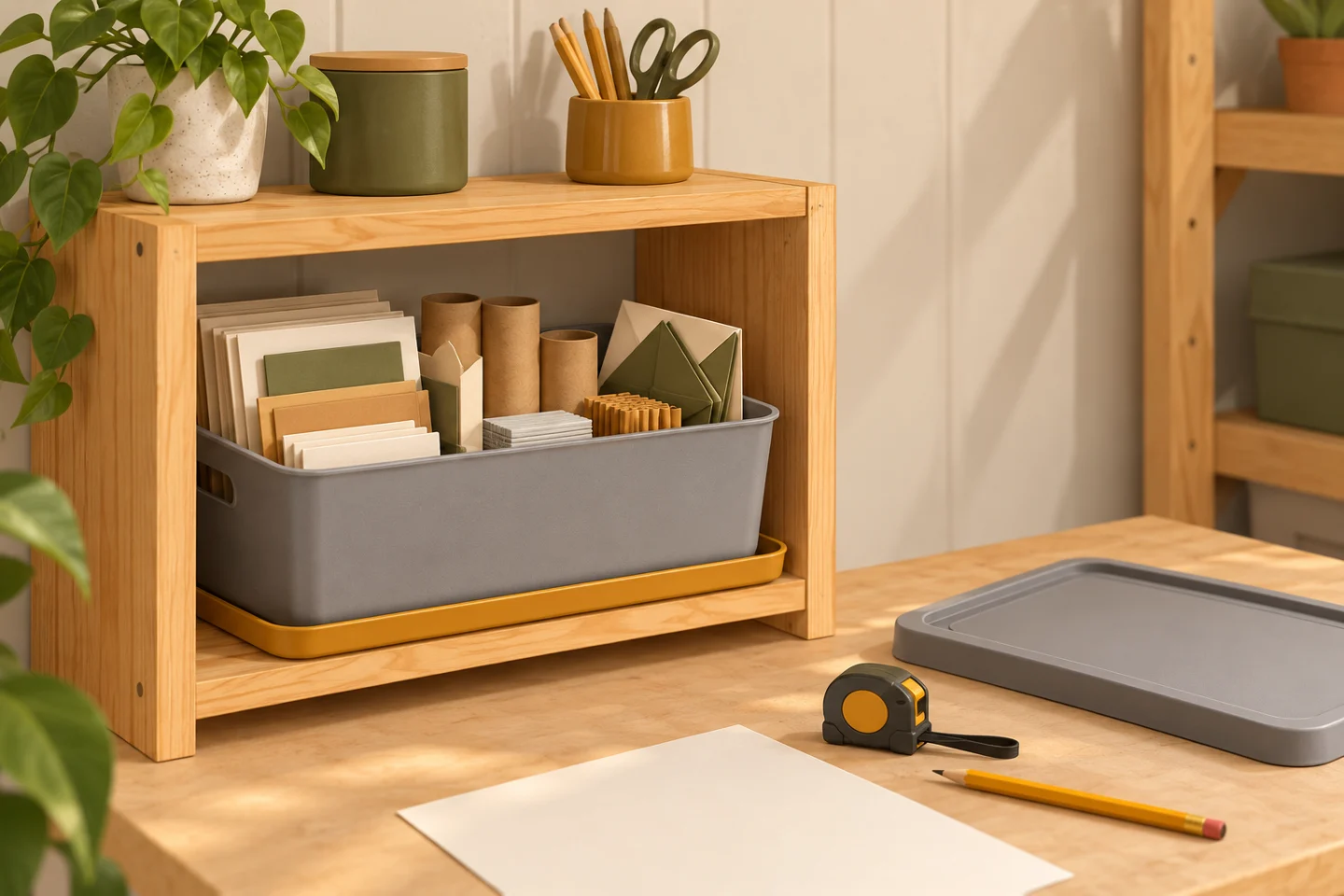
AI-generated concept illustration. Fictional objects and workspace; not a completed GAH project or product test.
For the first trial, use a suitable tray, bin and shelf you already own. Measure the whole stored kit, the bin’s usable inside space, its closed outside size and the clear shelf opening. Use the free bin and shelf fit checker to record the dimensions, then try the actual retrieval and return. The illustration supplies no real dimensions or promise of fit.
Keep the task to three visible results: group the kit; test its storage and carrying route; leave the kit and a next-step note in the agreed place. If the trial fails, the useful result may be a measured shortfall and a smaller next question, rather than a purchase.
Download the one-page weekend project sheet (PDF). It separates the finish line, existing supplies, unanswered questions, steps and closeout. Print and fill it by hand; no account or email is required.
Inspect before making a shopping list
Put the items involved together. Measure the intended location and inspect how the current setup fails. Record what you already own that could solve it: an empty tray, spare shelf, desk lamp or notebook may be enough for a first trial.
Then list the unknowns separately from the purchases. Wall construction, fastening instructions, access to an outlet and furniture clearance are questions to answer, not items to add blindly to a cart. Use the free Garage Layout Builder for comparing the layout, then verify dimensions and operation in the real room.
If the task changes a room layout, begin with the garage measuring guide. If someone else needs the same surface, agree on the shared-workspace handover before reserving it.
Break the work into visible steps
Use verbs: empty the shelf, clean the surface, group the current kit, test the arrangement, label the return location. Each step should leave an observable result. “Research storage” is too open-ended; “check the chosen accessory's compatibility and mounting instructions” gives you a decision to finish.
Mark dependencies. You cannot judge a shelf arrangement while unrelated items still occupy it. You should not begin an installation before confirming the required fixing method. Put those checks ahead of the enjoyable assembly step.
Estimate your available time using the actual weekend, including cleanup and interruptions. The plan does not become achievable just because the list fits on one page. Choose a stopping point where the room can be left usable if you run out of time.
Buy around a confirmed problem
If your trial shows that common tools need a reachable wall location, the wall-storage option below is a candidate to compare. First check the wall, fasteners, accessories and tool placement against its manufacturer guidance. Keep your existing drawer or toolbox if it already solves the problem.
We may earn a commission if you buy through the following link. As an Amazon Associate I earn from qualifying purchases.
If the planned task reveals that the work surface lacks useful illumination, move an existing lamp and inspect the shadows first. Compare an overhead shop light only if that trial leaves a specific need. Confirm its mounting, electrical and environmental requirements; an image of a cozy garage does not establish product suitability.
We may earn a commission if you buy through the following link. As an Amazon Associate I earn from qualifying purchases.
Keep the shopping budget separate from the project brief. Check current item price, quantity, delivery, tax, mounting supplies and any required help before committing. This guide does not quote a total or assume that a product is currently in stock.
Reserve a real closeout
Before the session ends, test the result with the actual activity. Retrieve the kit, work at the surface or return the tools. Note what still interrupts you. Put away equipment, handle waste appropriately and leave the room in the condition your household expects.
Record three things: what you completed, what you changed from the plan and the next unresolved question. A partial result can still be useful if it ends cleanly and tells you what to do next. Start the following weekend from that note, rather than from the vague instruction to improve everything.
A consistent reference photo can help the next session start from the same question. The phone project-photography guide explains how to make the useful detail visible without buying a camera.
Sources
Wall Control product and installation guidance and Feit manufacturer specification sheet, originally checked October 7, 2026 and reopened for this update. Manufacturer information supports product identity and installation context; the worked example and worksheet are GAH editorial planning guidance, not a hands-on product test.