

Researched guide • After Hours Upgrades • Product information checked September 15, 2026
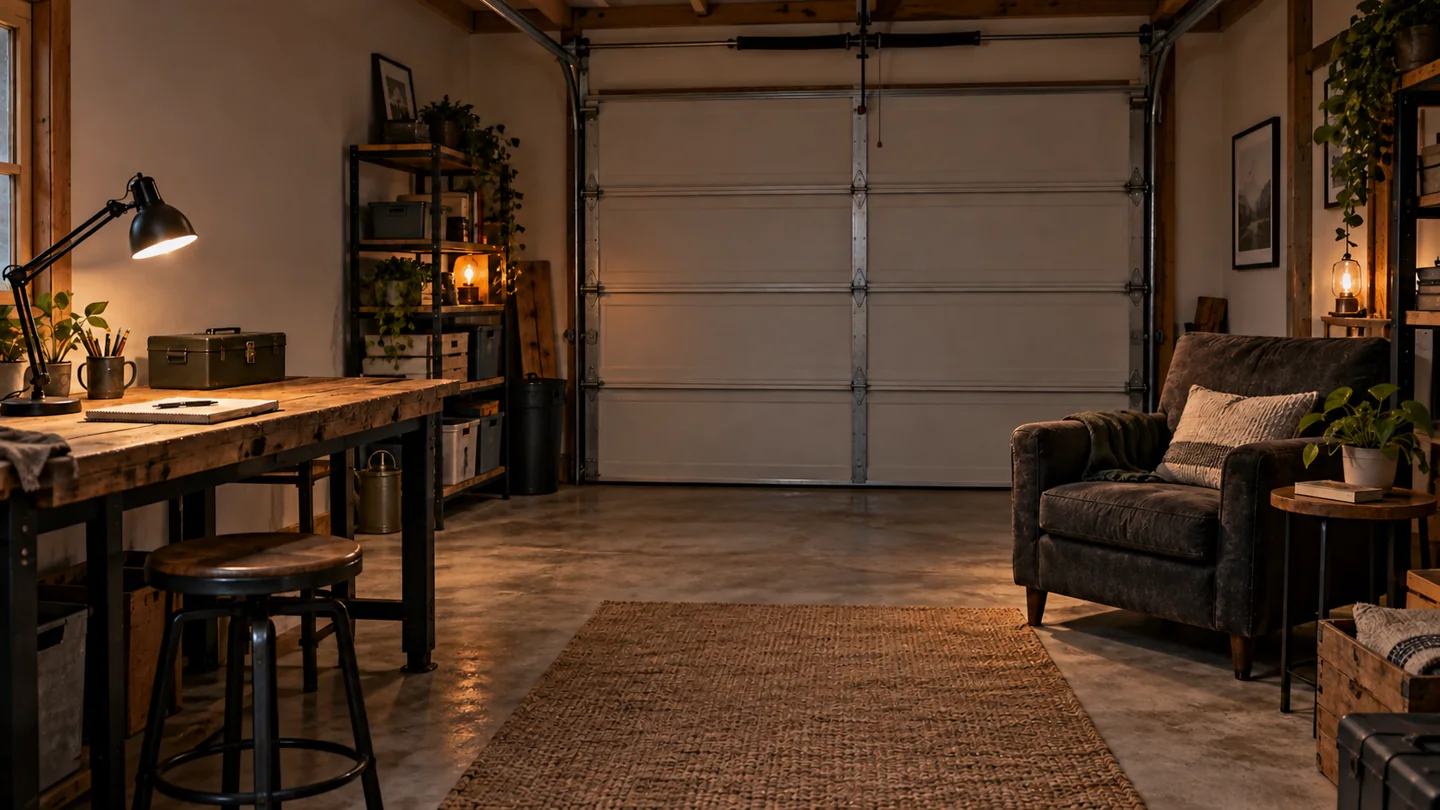
A garage can hold every unfinished intention in the house. The exercise bike. The camping gear. A workbench that technically exists beneath three unrelated projects. Somewhere in there is a place you would actually like to spend an evening.
You do not have to finish the entire room to make it useful. Start with one corner that supports something you already want to do: sketch, build a model, sort a project, read, or put your laptop down without balancing it on a storage tote.
The approach here is deliberately modest: choose a purpose, clear a usable spot, fix the light, and make putting things away less annoying. This is a researched planning guide, not a tested makeover or a claim about anyone’s completed garage.
1. Give the corner a job
Write one sentence: “This is where I want to ______.” Choose a real activity, not “have an awesome garage.” That second brief tends to produce a shopping cart instead of a useful room.
Then add one secondary use. A model-building table might also work for sketching. A laptop station might sit beside a reading chair. If the two activities constantly interfere, separate them in space or time rather than forcing one surface to do everything at once.
For an illustrative example, imagine a corner used for paperwork on weekday evenings and a small hobby project on weekends. It needs a clear surface, somewhere for the current project to wait, and light aimed at the work. It does not automatically need a TV, wall system, or new floor.
Measure the actual furniture footprint before moving it. Open nearby doors and drawers. Walk the route you use while carrying something. Keep access to exits, electrical equipment, and anything that needs servicing clear. A pleasing layout on paper still has to work on an ordinary Tuesday.
2. Clear a working surface before choosing storage
Pick a surface and remove everything that does not serve its primary job. Sort the displaced items into three groups: used here, stored elsewhere, and leaving the garage. Give the last group a next action; otherwise it becomes a permanent pile with a motivational name.
For the items staying nearby, make a small activity kit. A sketching kit might contain pencils, paper, and a sharpener. A model kit might have its current parts and instructions. Keep chemicals, sharp tools, batteries, and other items with special storage requirements in appropriate storage according to their instructions, not in a generic mixed bin.
Try containers you already own first. Live with the arrangement for several sessions before buying matching storage. You are learning what needs a home, how much room it takes, and whether you actually reach for it.
A useful reset is simple: return the kit, remove unrelated items, and leave the next starting point visible. That might be an open notebook or a labeled project tray. The objective is less setup friction, not a garage that looks untouched by humans.
3. Separate seeing the work from setting the mood
One overhead light may leave your hands working in your own shadow. Before replacing fixtures, try positioning a suitable task lamp so the light reaches the work without shining into your eyes or reflecting across a screen. Check the view from your actual seated or standing position.
When comparing bulbs, lumens describe brightness; watts describe energy use. The Lighting Facts label also gives light appearance information. The Department of Energy’s lighting guidance explains how to read those distinctions. A warmer appearance is a style preference for a hangout corner, not proof that a bulb provides enough working light.
Keep useful task illumination available when the softer background light comes on. Choose bulbs compatible with the fixture and its instructions. If the existing setup needs new wiring or you are unsure about electrical capacity, make that a separate job for a qualified professional. A mood board cannot assess a circuit.
For lamps and electronics, also check whether the manufacturer permits the conditions in your garage. A room that gets damp or unusually hot is not interchangeable with an indoor desk setup.
4. Make sitting down part of the plan
Bring in a chair you already find comfortable and try the actual activity. Can you get close enough to the table? Does the seat tuck away without blocking the route? Can you reach the things you use without repeatedly getting up?
Use those observations to write your buying criteria. “Fits under this table and feels comfortable during my usual session” is more useful than “looks like a workshop chair.” A lounge chair and a task chair have different jobs; one purchase may not solve both.
Keep soft furnishings away from messy or hazardous work. If cutting, sanding, finishing, or other activities affect the same space, address their specific dust, ventilation, and fire precautions before calling it a hangout. This guide does not design those controls or approve a garage as habitable space.
Never operate a generator inside a garage, even with doors open. The CDC’s carbon-monoxide guidance explains that fuel-burning equipment can produce this dangerous gas. Skip improvised combustion-based comfort fixes.
5. Buy for the bottleneck, not the photograph
These two researched examples illustrate different jobs. They are not a ranked comparison or hands-on recommendations. Links go directly to the retailer; no affiliate tracking is attached.
| If you need… | Example to investigate | Check before buying |
|---|---|---|
| Light you can aim at a desk activity | IKEA TERTIAL, dark gray | IKEA lists an adjustable arm and head. Confirm mounting fit and suitable operating conditions; bulb is separate. |
| A small visible home for project supplies | IKEA SAMLA, 1-gallon clear box | The lid is separate. IKEA specifies indoor use and says it is not approved for food contact. |
The no-new-purchase alternatives are an appropriate lamp and container you already have. That is a meaningful option, especially while you are still figuring out the layout.
If buying, count the whole basket: quantities, necessary accessories, shipping, tax, and any installation work. Record prices on the day you check them. A few products do not make a whole-garage budget. Availability and suitability still need checking for your location and space.
6. Run a small trial before expanding
Use the corner for three normal sessions. Keep a scrap of paper nearby and note what interrupts you: hunting for supplies, nowhere to set a drink, awkward light, or a project that cannot stay put. These are observations, not a scientific test, but they give the next decision something concrete to work from.
Change one thing and try again. If the storage works, leave it alone. If you never use the second seat, reclaim the floor. Add music, a small print, or a plant when the essentials work and the conditions suit it.
Your first useful garage corner is allowed to be unfinished. Tonight, write its one-sentence job and clear the surface that supports it. Making room for yourself starts when the space makes doing your thing a little easier.
Try the room before shopping
Put the activities you want on a single sketch: where your hands work, where a project waits, and where you sit. Reuse the largest pieces first. During one real session, note the interruption that costs the most attention: retrieving a tool, finding a place to pause, or aiming a light. Fix that interruption before changing the whole room.
Compare a wall tool zone only if it shortens repeated retrieval. Compare broader shop lighting only if moving a suitable existing light leaves the working zone uneven. Neither purchase establishes that the arrangement fits your garage.
As an Amazon Associate I earn from qualifying purchases. We may earn a commission if you buy through the optional product links.
Check current prices on Amazon. No item-price estimate or total is quoted here. Allow separately for quantity, delivery, tax, mounting supplies and any qualified help.
Sources
US Department of Energy, FEMP lighting guidance · Checked 2026-09-15.
IKEA US TERTIAL 203.554.34 · Checked 2026-09-15.
IKEA US SAMLA 701.029.72 · Checked 2026-09-15.
CDC Carbon Monoxide Poisoning Basics · Checked 2026-09-15.